




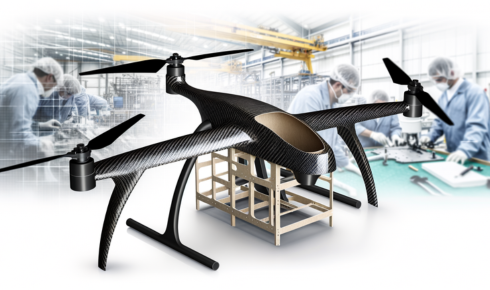
The global drone industry continues to expand at an impressive pace, driven by demand in defense, agriculture, logistics, mapping, and industrial inspection. At the heart of this growth lies material innovation, particularly the use of composites for drones that deliver exceptional strength, reduced weight, and enhanced durability. As performance expectations rise, manufacturers increasingly depend on advanced composite technologies to meet operational challenges.
The Importance of Lightweight Structural Design
Weight is one of the most critical factors in drone engineering. Reduced mass directly impacts flight time, payload capacity, and energy efficiency. This is where UAV composites provide a significant advantage over traditional materials like aluminum or steel.
Composite materials typically consist of reinforcing fibers such as carbon fiber or fiberglass embedded in a resin matrix. This combination results in a high strength-to-weight ratio, making drone airframes both lighter and stronger. Lighter drones require less power to stay airborne, allowing longer missions and improved maneuverability. Additionally, composite structures offer superior fatigue resistance, which is essential for drones operating in demanding environments.
Enhancing Durability with UAS Composite Materials
Modern drone systems must withstand vibration, temperature fluctuations, moisture exposure, and mechanical stress. The use of UAS composite materials ensures structural integrity without compromising performance.
These materials offer:
- Excellent corrosion resistance for coastal or humid environments
- High stiffness for improved flight stability
- Impact resistance to protect sensitive onboard electronics
- Reduced maintenance requirements over time
In military and commercial applications alike, durability is critical. Composite fuselages and wing structures are designed to absorb stress while maintaining aerodynamic efficiency. The result is a longer service life and lower total operating costs.
The Role of UAV Prepregs in Precision Manufacturing
To achieve consistent performance, manufacturers rely on UAV prepregs in the fabrication process. Prepregs are reinforcement fibers pre-impregnated with a carefully controlled amount of resin. This ensures uniform distribution and optimal mechanical properties across every component.
Using prepregs improves production accuracy because fiber orientation can be precisely aligned to handle specific load paths. For example, drone arms and wings can be engineered to withstand torsional and bending forces more effectively. Prepreg systems also reduce excess resin usage, minimizing weight while maximizing strength.
Another major benefit is quality control. Since the resin content is pre-measured, manufacturers achieve repeatable results, which is essential for large-scale drone production. Prepreg materials are widely used in high-performance UAV platforms where reliability and structural consistency are non-negotiable.
Accelerating Production with Snap Cure Composites
Speed and efficiency are increasingly important in drone manufacturing. Traditional composite curing processes can take several hours, slowing production cycles. The introduction of snap cure composites has significantly reduced curing times while maintaining structural integrity.
Snap cure systems are designed to cure rapidly under controlled heat and pressure, sometimes in just minutes. This dramatically increases manufacturing throughput and reduces energy consumption. Faster curing allows companies to respond quickly to market demands, particularly in industries requiring rapid drone deployment.
Beyond speed, snap cure technology supports automation. It integrates seamlessly with advanced production methods such as automated fiber placement (AFP) and robotic layup systems. These processes enhance precision, reduce labor costs, and improve overall efficiency.
Applications Across Drone Industries
Advanced composite technologies are essential across various drone categories:
- Commercial Delivery Drones: Lightweight composite frames increase range and payload efficiency.
- Agricultural Drones: Corrosion-resistant materials handle exposure to chemicals and moisture.
- Defense UAVs: High-strength composite structures provide durability and stealth advantages.
- Inspection and Survey Drones: Rigid composite arms improve camera stability and imaging accuracy.
In each case, composite materials enhance aerodynamic performance, reduce operational costs, and improve overall reliability.
The Future of Drone Composite Innovation
Looking ahead, material science continues to evolve. Researchers are developing recyclable resins, bio-based composite systems, and nano-enhanced reinforcements that further improve mechanical performance. Sustainability is becoming a priority, pushing manufacturers toward eco-friendly solutions without sacrificing strength or durability.
Automation will also play a larger role, combining advanced materials with digital manufacturing processes to streamline production. The integration of faster curing systems and high-performance prepregs ensures drones remain lighter, stronger, and more efficient.
Conclusion
The success of modern drone technology depends heavily on advanced material solutions. From structural airframes to high-speed production methods, composites have transformed UAV and UAS development. By leveraging innovations such as prepregs and snap cure systems, manufacturers can meet the growing demand for stronger, lighter, and more reliable drones.
As industries continue adopting unmanned systems, composite materials will remain at the forefront of innovation—driving improved performance, efficiency, and durability in the next generation of aerial platforms.
 Admin
Admin