
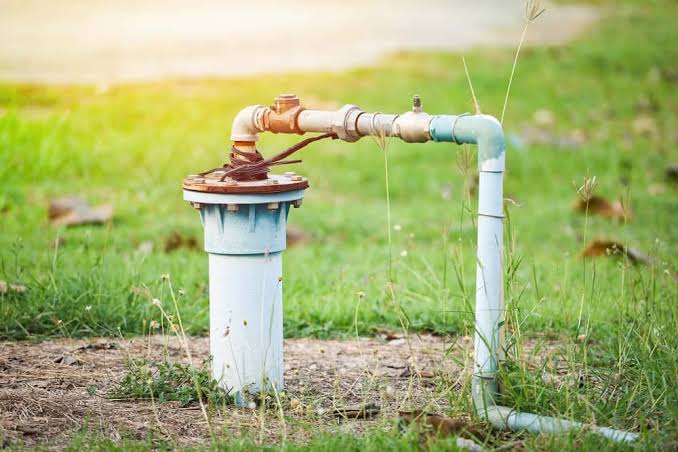




When we bought our place a couple years ago, the well was just this fact I sort of accepted and moved on from. No city water bill, quieter neighborhood, felt like a win at the time. What I didn’t think about, not once during the whole home-buying whirlwind, was that having a well means you’re also kind of your own personal water utility. Nobody’s treating it for you in the background. It’s just… there, coming straight from the ground, and it’s on you to know what’s actually in it.
I found this out the slow way, honestly. Little things first — a faint metallic taste some mornings, an orange-ish tint in the bathtub that I kept blaming on “old pipes” without really investigating. It took my neighbor mentioning her own well problems for me to realize this probably wasn’t just an old-house quirk. It might actually be worth looking into.
Wells Don’t Come with a Warning Label
Here’s what nobody tells you when you buy a house with a well — unlike city water, which gets tested and treated on some regular schedule by people whose job is literally that, your well is just… untouched, unless you do something about it. No automatic oversight. No annual report in your mailbox telling you what’s in it. You could go years without knowing whether your water’s actually fine or quietly not fine.
That’s the whole point of well water testing, and I really wish I’d understood its importance sooner than I did. It’s not some optional extra for the overly cautious — it’s genuinely the only way you find out what’s actually coming out of your tap, since nobody else is checking for you. Bacteria, nitrates, iron, hardness, pH imbalance, arsenic in some regions depending on local geology — the list of things that can show up unnoticed is longer than I expected, and none of it announces itself with an obvious smell or taste every time.
The Cost Excuse I Used for Way Too Long
I’ll be honest about why I put this off as long as I did — I assumed testing was expensive, some multi-hundred-dollar ordeal I’d get around to “eventually.” Classic homeowner procrastination, dressed up as a budgeting decision. Turns out that assumption was flat-out wrong, at least for a basic screening.
A lot of local water treatment companies actually offer free water testing as a starting point, precisely because they want you to know what you’re dealing with before recommending anything. No obligation, no upfront cost, just someone coming out to collect a sample and run the basics. I felt a little silly once I realized I’d been avoiding something that didn’t even cost me anything, purely out of assumption I’d never bothered to check.
Numbers Without Context Don’t Mean Much
Getting the actual test results back was its own small adventure — a page full of numbers, mineral levels, pH readings, bacteria counts, none of which meant a whole lot to me on their own. I stared at it for a solid five minutes trying to figure out if “180 ppm hardness” was supposed to worry me or not. Spoiler: it kind of was, but I had no way of knowing that from the number alone.
This is where actual expert analysis made all the difference, honestly. The technician walked me through what each number meant in plain language — which levels were fine, which ones explained the metallic taste, which one was almost certainly behind the orange tint I’d been blaming on old pipes for way too long (turned out to be iron, for the record). Having someone translate the data into an actual explanation, instead of just handing me a spreadsheet and walking off, made the whole thing feel manageable instead of overwhelming.
The Part Where I Stopped Guessing
Looking back, the whole process took maybe an hour of my time, total. That’s it. And in exchange, I went from vaguely uneasy about my water — blaming random household quirks on “old house stuff” — to actually understanding what was going on and doing something about it. The orange tint’s gone now. The metallic taste too. Small fixes, once I actually knew what I was fixing.
If you’re on a well and you’ve been doing what I did — noticing little oddities and quietly explaining them away — it’s genuinely worth just getting it checked. It costs you basically nothing to find out, and knowing beats guessing every single time, especially with something your whole household depends on every single day without a second thought.
 Admin
Admin